Batik Tulis Lintang Malang

Batik Lintang Gradually Shifts to Natural Dyes, Contributing to Climate Change Mitigation
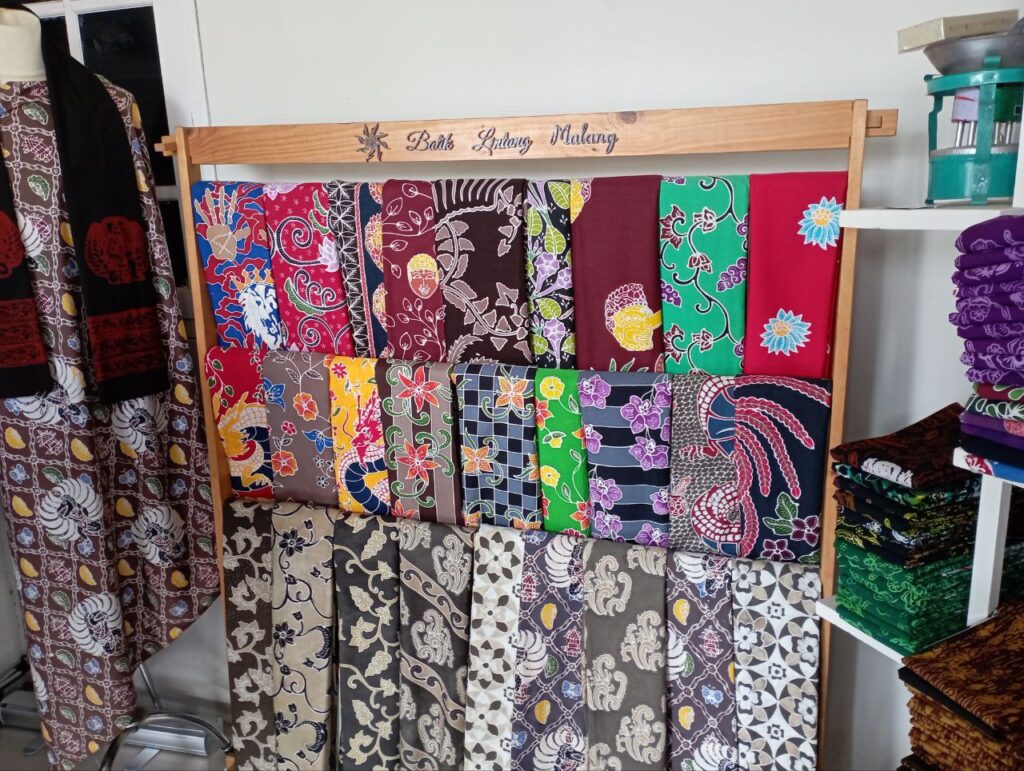
Batik Lintang transitions to natural dyes during batik production at Batik Lintang Gallery in Malang on May 15, 2024.
Malang, May 15th, 2024 – Batik Lintang, a renowned batik producer in Malang Regency, East Java, is in the process of transitioning to using natural dyes. Ita Fitriyah (46), the owner of Batik Lintang, explained the reasons and challenges behind this change. Although not fully transitioned yet, Batik Lintang is determined to move towards more environmentally friendly batik production, a step aligned with Sustainable Development Goal (SDG) number 13 on Climate Action.
Ita explained that this decision is driven by the desire to create “green batik” that is environmentally friendly and widely accepted by the community. “We are still in the gradual phase of transitioning to natural dyes. Our independent production already uses natural dyes, but for customer orders, we still use synthetic dyes due to demand and price,” she explained.
Natural dyes, despite being expensive, are more environmentally friendly. Therefore, batik products made with natural dyes are currently only affordable for the upper-middle class. “When we launched products with natural dyes, they were very well received by the upper-middle class. However, for the lower-middle class, the price is still a barrier,” Ita added.
In terms of colour quality, natural dyes offer flexibility. Ita explained that the colour intensity could be adjusted according to the customer’s wishes. “The colour from natural dyes depends on the mordant. If the customer wants a dark colour, it can be made dark, and vice versa. Natural dyes produce soft colours that can be customised according to customer requests.”
However, this transition is not without challenges. The dyeing process with natural materials takes longer compared to synthetic dyes. “The natural dyeing process is very time-consuming. For one fabric with a complex pattern, it can take six months to a year, while synthetic dyes can be completed in two months,” she said. The natural dyeing process involves many stages, from selecting materials, extracting dyes, and dipping, which can reach up to 30 times for the desired colour.
In addition to time challenges, using natural dyes also requires special skills from workers. Ita noted that the workers do not complain, but the long and intensive process requires extra concentration and effort. “We continue to produce batik even without orders, for independent production. We want everything to go back to green batik and not continue polluting the environment,” Ita said.
Ita also emphasised the importance of reducing negative impacts on the environment. “Synthetic dyes produce carbon and pollution. To minimise this impact, we neutralise dye waste before disposal. With natural dyes, we don’t need to neutralise because the waste is safe and can be absorbed by the soil,” she explained.
Batik Lintang’s move to switch to natural dyes supports global efforts to reduce the impacts of climate change, as promoted by SDGs number 13. Using natural dyes reduces carbon emissions and pollution generated from synthetic dyes, thereby helping to preserve the environment.
Using natural dyes is not only environmentally friendly but also safer for workers. “The dyeing process with natural dyes does not cause itching like synthetic dyes. Workers feel safer and more comfortable, even though the process is longer,” Ita said.
With all its challenges and advantages, Batik Lintang is committed to continuously improving environmentally friendly batik production. “We believe that by using natural dyes, economic value and environmental sustainability can be maintained. This is a small step towards a greener future,” she added.
 ENG
ENG  ID
ID